Drive to Write
it's still a ways away

I am surrounded by born fiction writers. Some friends started dictating stories into a tape recorder as toddlers, before they were even literate. Another friend wrote a full-length, printed, illustrated, bound novel in the fifth grade.
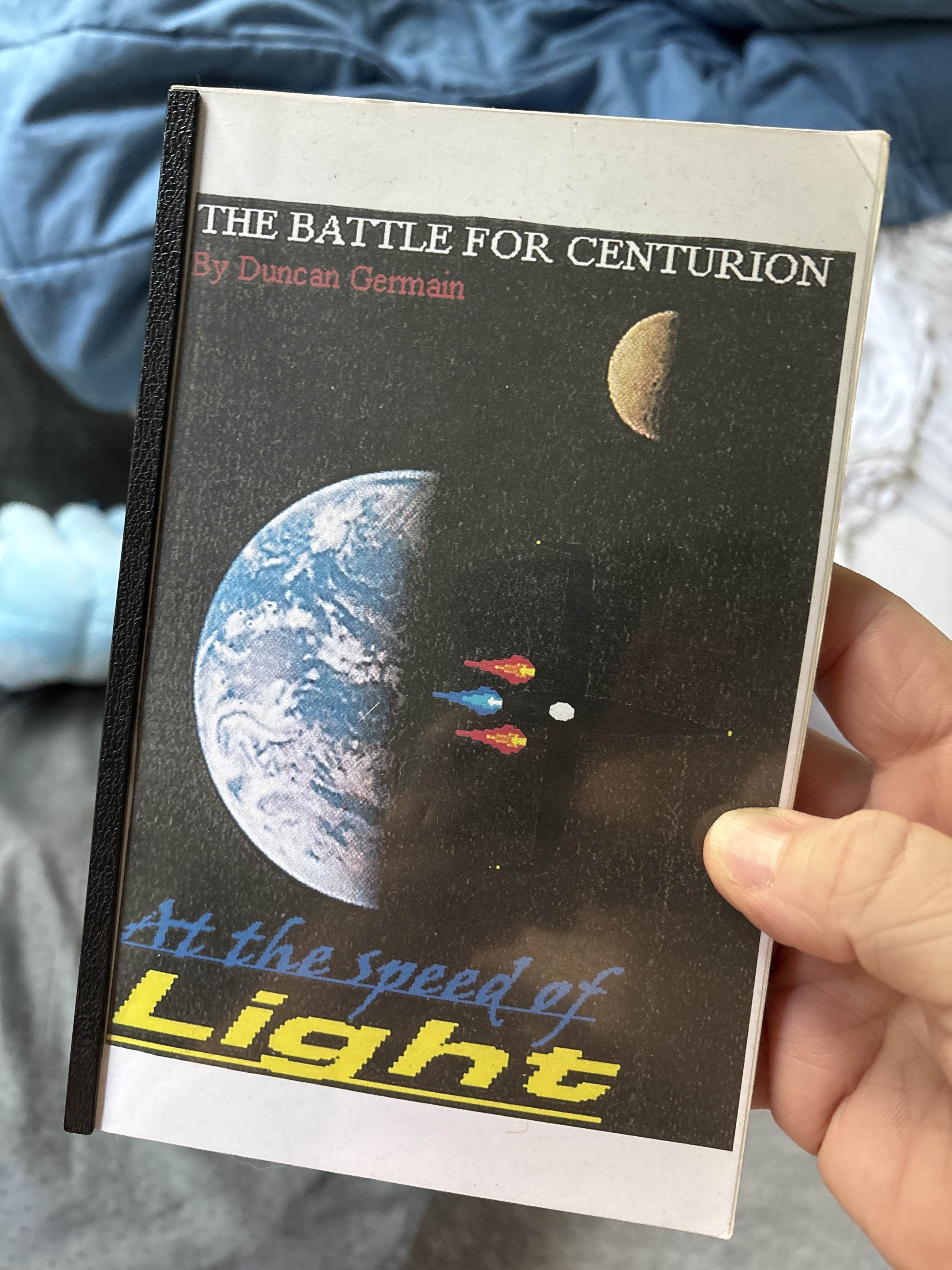
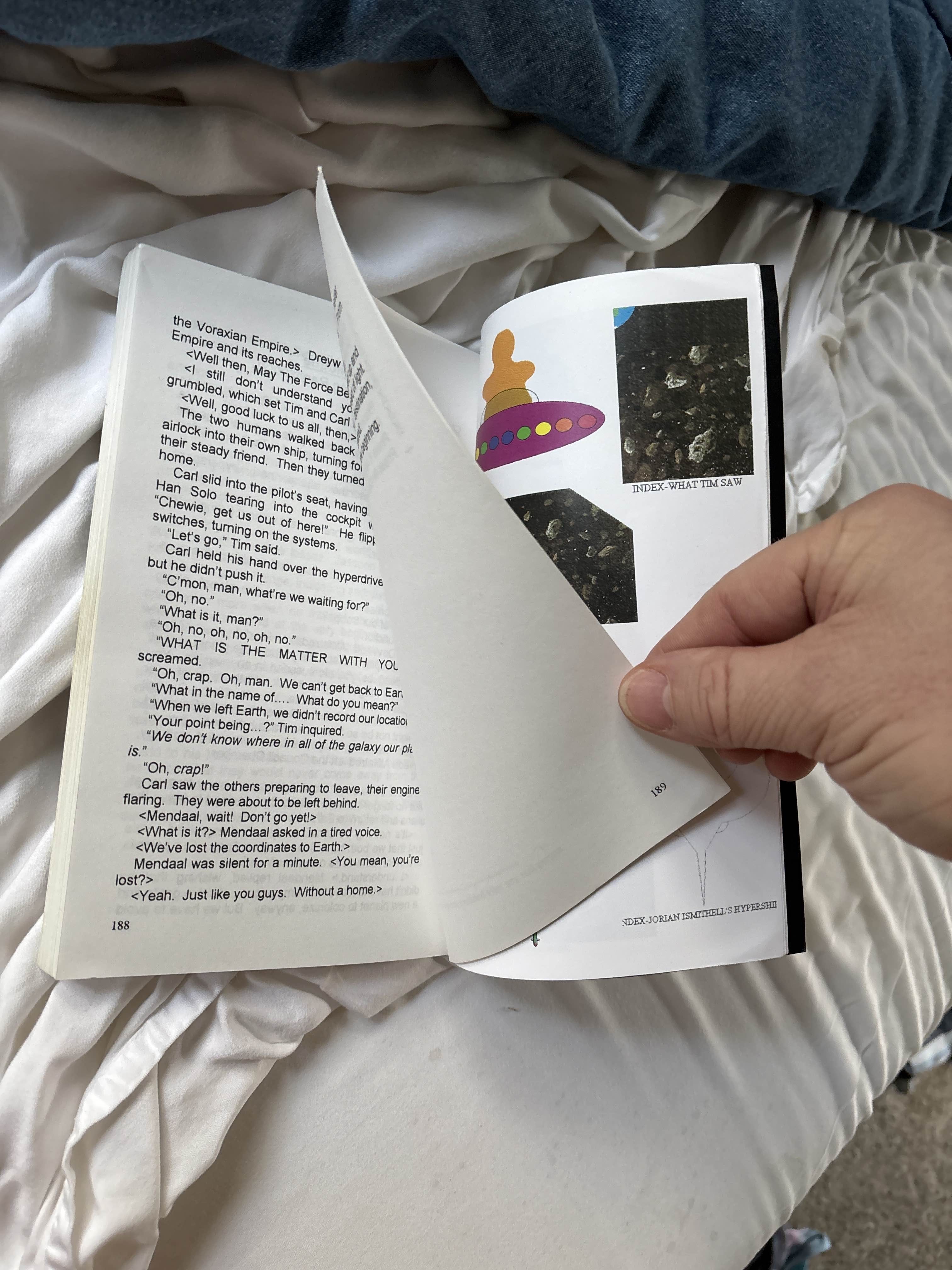
When I heard these stories, I despaired, because I don’t have stories like those. Did I miss the boat? Furthermore, did I miss it when Ronald Reagan was in office? That boat could be anywhere by now!
Maybe there are two kinds of people in the world, Writers and Not-Writers, and there is no boat between the lands. You just live on the continent you’re born on.
I don’t have a cache of embarrassing early manuscripts. I’m embarrassed by my lack of embarrassment. Still, I keep going anyway, trying to learn to write, wondering if I’m indulging in the sunk cost fallacy yet again. (It’s my favorite fallacy.)
Recently, Ozy Brennan, who is definitely a Writer, said this:
I’m pretty sure I don’t have to write or want to write. Instead, I have a compulsion to write. I have written an average of something like 500 words a day every day since I was twelve years old, except when I was very severely depressed. (Moderate depression isn’t enough to stop me.) Writing is an activity that simply happens for me, the same way that eating naturally happens, and with somewhat more regularity than brushing my teeth. I have no volitional control over it.
And when they put it like that, suddenly I felt a lot better.
First of all: twelve. That’s later than I feared. I definitely didn’t have the symptoms of Writerhood at age two or age five, but twelve? No, not then either, but that kind of timeline gave me hope.
And more importantly: 500 words a day. Wait. Is writing just… producing words?
I sure do produce a lot of words every day, and I have for a long time.
When did I start?
Hmm, it must have been when I got access to email.
It would have been about 1992, when my family got CompuServe, and then even more the following year, when I got dialup accounts at both MIT (Athena) and the University of Minnesota. More importantly, I started to collect long-distance boyfriends I’d met at various math and science summer camps. At first I wrote to them with pencil and paper, but as soon as we all had email, my daily word count exploded. “I wrote you 50KB today”1 was another way to say “I love you.”2
I wasn’t writing fiction. I wasn’t making up stories, except sometimes when I wrote down my fantasies. But I was absolutely writing narratively a lot of the time, describing what it was like to be me, and sending my words to someone a thousand miles and a gender away. And I’ve never really stopped doing that in the last thirty-plus years.3
So now our model is more complicated. Even if it’s true, say, that you are either a Writer or a Not-Writer, perhaps Writing can manifest later than preschool, and maybe there’s more than one kind of Writer. My friends have always written fiction, and I haven’t, but we’ve all compulsively produced a lot of words. Is it possible for a writer to learn a new type of writing? Or am I just on a different island in an archipelago, the Not-Storyteller island, with no boat in sight?
I still don’t completely know the answer to that, though I begin to have strong suspicions.
Do the writing advice books answer this question? Not really. They are almost uniformly written from the perspective of the Born Storyteller. They assume that you have numerous filing cabinets full of abandoned manuscripts, and that you can just pull out old stories and characters and use them as fodder for exercises in improvement. These books are not so much about becoming a writer, or evolving as a writer, as they are about directing your existing writing activity more effectively. They do not, for the most part, address the questions I have about acquiring the drive to tell stories.
No help there. I’ll just have to gather my own data and try to figure it out, starting with the question of motivation.
Those who are born to write don’t seem to question their own motivations much, they just write, as if driven by a compulsion. They can’t help it, any more than they can stop their own hearts from beating.
But for me, becoming a fiction writer is a choice, and so I have to ask myself — why? What am I hoping to get out of writing, and at what cost? Will the deal I strike be worth it? Are the writers around me happy with their bargains, or are they stuck in a miserable cycle of toil their writing addiction won’t let them shake? Should I just be grateful that I was born without the yoke of fiction-writing-compulsion around my neck, and go forth and enjoy my fiction-free life?
So I had a look around, to see why other people write, beyond “I can’t help it.”
Motivations vary, of course.
Several of my friends write because they want to find out what happens next. This concept is foreign to me, at least in solo writing. I’m an intrinsic plotter, so figuring out what happens and writing down the story are two completely separate actions. It’s obvious what happens! The hero wins, and learns an important lesson about herself along the way! Writing it out in story form does nothing to enlighten me. My pantser friends somehow plow into their stories almost completely unaware of how the story will unfold, and are as delighted as anyone else when it turns out that the romantic leads kiss at the end.
I admit that I do my co-writing this way, and it’s fun! I do like being surprised right alongside my readers. It helps that half the surprises are generated within my co-author; this way I get to have the more reliable fun of being a reader mixed in with the struggles of being a writer. The problem is, most co-written fiction, mine included, is terrible. The pacing is nearly always bad, and most stories do not build to a satisfying resolution. Far more often, the authors write themselves into a corner or they just lose interest, and then the story ends, unfinished. I don’t know how to combine the motivation of “find out what happens next” with the creation of anything I can be proud of, not without a huge amount of post-facto planning and burdensome revision.
Another friend observes that fiction is great tech for explaining things. Yes, nonfiction shines if you want to express dry technical facts clearly and concisely — but if you want your reader to empathize, to take a point of view, to imagine what it would be like to be in a specific situation, to viscerally feel the fear or the euphoria that motivates someone in that situation — then fiction is the tool for the job. Storytelling activates person simulation hardware in the brain, my friend claims, and is therefore the best vehicle for conveying ideas about humans and decision-making.
This sounded true in an academic way but I hadn’t felt the power of the idea in action until just recently. I started dating someone new. With the enthusiastic consent of everyone involved, I wrote a brief, smutty narrative version of a recent sexual encounter with my established partner and I sent it to my new partner, who sent back [heart][sparkles][fire] emojis and said he learned more from my brief story than from my sex doc. This was a surprise, because my sex doc is eleven information-dense pages, organized into neatly bullet-pointed sections full of everything you need to know to operate my brain and body in an erotic context. How did a 667-word story outperform my doc? Presumably by showing how all my kinks and thoughts and behaviors all function together as an integrated whole. And, uh, just maybe by being more fun to read?
But readers shouldn’t be the only ones having fun — writing can be a vehicle for emotional sadism and dominance. Some writers, perfectly kind and ethical people in everyday life, take great joy in tormenting their readers, composing a tragic symphony out of the anguished wails of their audience. These writers — and again, I cannot stress enough that these are good people who, in real life, never run over lost puppies in the road — love nothing better than to receive histrionic reactions from their readers. I think the desire to make your audience feel is probably as old as storytelling, but writers who thrive on feedback are positively reinforced by modern online writing, getting comments and reactions in real time, and so maybe we are seeing an upswing in writing-sadism.
For some creators, it goes beyond evoking emotion and into creating entirely new realms of thought and desire in the audience. Here’s YouTuber and musician CJ the X:
“Let’s talk about the performer-audience relationship. […]
An artist is supposed to be above the audience. You do not like me because I do the things that you want me to do. You don’t think I’m a good artist because I satisfy your oh-so-ingenious requests.
Our relationship—insofar as it even exists—is not predicated on me caring what you think or feel. If you like my work, you like it precisely because I do things that you don’t know to ask for, and could never think of. You don’t know what you want. I know what you want for you. I don’t care what you care about—I tell you what to care about. I don’t satisfy your needs. I invent your needs. You didn’t even know to beg for [some specific content] until I invented the fucking show!”
To me, this is currently a breathtakingly arrogant point of view! I don’t begrudge it to CJ, and certainly I’ve been on the receiving end of that deal with other artists in the past and enjoyed it immensely. It is, indeed, fun to have someone with greater insight and creativity take me on a ride, and I appreciate it when they are good enough at what they do to make me retroactively glad I bought the ticket.
But when I entertain the idea that I will now tell my audience what to care about, I don’t currently believe I’ve got the goods.
I like writing non-fiction because the deal I enter into with my readers is so clear. They have a question, I have an answer. They don’t understand some part of the world, and I have a good model of that and can explain it so they get it. I know what value I’m adding, how I’m helping them. And yes, sometimes I’m so far ahead of my audience that first I must persuade them that I have some information worth their time to absorb, and only then can I tell them the information itself.
CJ’s claims seem qualitatively different to me. And perhaps I should just follow their lead and call their work Art, inasmuch as it does what they claim, and continue to aim more for Craft myself. (I’ll talk more about Art and Craft in a later article.) I just want to tell a story well and entertain my readers, not to think of them as sheeple who need to be led into an idea pasture of my unique creation.
(Oh, look! In pushing back against CJ, I’ve inadvertently, tentatively expressed a motivation of my own. Shhh, don’t stare straight at it, that will scare it away.)
I’ll talk about one final set of motivations I see in others around me, much more on the Craft end of the spectrum. Writing well is a technical challenge. You have to build a coherent world, pay off all of your plot promises, manage your pacing, create compelling characters who grow and learn — and all of this takes time, effort, and dedication. Very few people manage to write any novel at all in their lifetime, much less a good one. Some writers want to write just to see if they can do it.
And some are unexcited about the process of writing, but they particularly crave having written. What a great thing it is, to have written a novel. All of the suffering is in the past and only glory remains. And better yet, at least for some of my friends, is that now they get to read the kind of stories they like the best, because they took the time to bring those stories into the world.
So as I thought about this, about Born Writers and especially about Born Fiction Writers, I got interested in the neuroscience of motivation. How does wanting to write actually work and when does it get installed? How malleable is it, really?
At that point I was at risk of going down an entirely different rabbit-warren that branched off the “how to write fiction” rabbit hole I was already occupying, so I kept my research on motivation pretty shallow. Here’s what I learned, in brief.
Wanting is complicated.
Okay, that was too compressed, let me break it down a little bit more than that.
Wanting includes, at least, these three systems:4
Abstract evaluation of the value of an activity. When I think rationally about wanting to share a hobby with the person I love, about wanting to accomplish something difficult, this is abstract evaluation. It happens mostly in the prefrontal cortex.
Feeling a magnetic pull to do that activity. This is the “just wanna” part, the compulsion part. I don’t especially have this for writing fiction. If I did, my mesolimbic dopamine system would be lighting up about it. The dopamine stuff is pretty complicated. It contains learning feedback systems — when you enjoy an activity, you feel more pull to do it again in the future. There’s also machinery that tracks return on investment, and still yet more machinery for continually deciding to continue the activity rather than getting distracted and doing something else.
Forming habits that pave the way for the activity. When you form habits, you rewrite some other part of your brain in a way I didn’t read much about. I will just say the phrases basal ganglia and dorsal striatum to add to my thin veneer of scientific respectability. It’s okay if you’re not fooled.
I’ve done pretty well with habit-formation. I have a lot of practice at adopting habits on purpose and I know how to do it. And my abstract evaluation is in good shape. Pretty clearly the problem, insofar as any of this is a “problem,” is in the magnetic pull department.
So my next question was — why did all my fiction-writing friends get the magnetic pull module installed in childhood?
I don’t know, of course, but my best shallow guess is simply that their earliest experiences of storytelling felt good. Maybe they were tickled by their own stories. Maybe they got a little praise or affirmation from other people. Maybe they had some other problem in their lives, such as loneliness or boredom or confusion, and creating stories helped them solve those problems or regulate themselves. One way or another, they got a positive feedback loop going early, one that didn’t involve already being great at storytelling, because of course they weren’t already great, they were beginners. They found some more self-reinforcing motivation than that. And then it became a habit, and then through practice they became good at it, and then the habit got lots of sources of reinforcement after that.
I never went around that reinforcement loop with storytelling. I went down different tracks instead, ones I’ve enjoyed very much, but none of them were storytelling.
And now, trying to install writing-wanting as an adult is a much harder problem. Abstract prefrontal-cortex-wanting simply does not substitute in for magnetic-pull dopamine-system wanting, and in some cases prefrontal-cortex-wanting actually gets in the way — because the prefrontal cortex is a planner, an optimizer. It is constantly asking the question, “what is the best way to get what I want?” And “doing an optional, high-risk-high-potential-payout activity that is currently not that fun or productive” is almost never the best way to get what I want. At any given time, there are better paths, at least for optimizing short-to-medium-term goals.
I can, of course, use willpower, if I am pretty sure that an activity will lead to the right place in the long term. But forcing myself through an activity that is repeatedly unfun and unproductive, without any obvious sense of progress, produces the opposite kind of learning in the dopamine system — it teaches it that the activity is aversive — which in turn makes that activity less likely to fulfill my long-term goals even by the prefrontal cortex’s cold and calculating lights.
Writing is hard. It takes a lot of practice to be good at it. It takes a lot of dedication to sit down and write something as long as a novel, and to make that novel hang together in the right way. You need to find your rewards along the way, or else you need a vast supply of willpower — and you’re not going to find rewards along the way, unless you learned early that writing individual sentences and paragraphs was intrinsically delicious.
When you’re a kid, you’re in a position to bootstrap fun. You’re not very discriminating. You don’t have a wealth of life experience from which to draw comparisons. Whatever you stumble into, if it happens to go well when you first try it, then you snowball from there. You can take that reward signal and amplify it, and along the way you get practice at the weird hard activity you stumbled into, and you become good at it, and then you get more kinds of reward signal, and you’re off to the races.
It just doesn’t work as easily in an older, more jaded and experienced brain.
And that, I think, is why you don’t find all that many writers who weren’t Born Writers — and why I currently think I’m unlikely to end up writing any novels.
I might still write a lot of collaborative fiction with my boyfriend, though. More on that in a few days, in Allegedly Unsolvable Writing Problems.
About 8,000 words.
My definition of “I love you” changed later.
When I realized, recently, that I was sitting on at least a million unpublished words, probably more, and that some of those words were pretty good, I decided to publish some of them. You can read them at my limited-edition blog Letters to Boys, in which I published one letter every day in November, 2025.
You should know that I ran this summary past an LLM and the LLM pushed its glasses up its nose and said “Well ackshually” and had several quibbles with my oversimplifications. Please do not take this summary as actual science. It is not.
Appreciate this article, this sums up a lot of feelings I have had on writing. I am definitely not a born writer but something I have tried to dabble in with little success due to the nature of writing you described.